Table of Contents
When Drexel University researchers went into 100 Philadelphia homes with a checklist modeled on a restaurant inspection, 43% of the refrigerators were running at 41°F or warmer. Only 4% had a thermometer inside. So if you’ve never asked what temperature a refrigerator should be, odds are you’ve never seen yours, and this is the week it matters. In a few days you’ll load a frozen 18-pound bird, three gallons of cider and a sheet pan of make-ahead stuffing into that box, and USDA’s turkey thaw chart assumes the box is already doing its job.
The answer is 40°F, and your dial can’t tell you whether you’re there
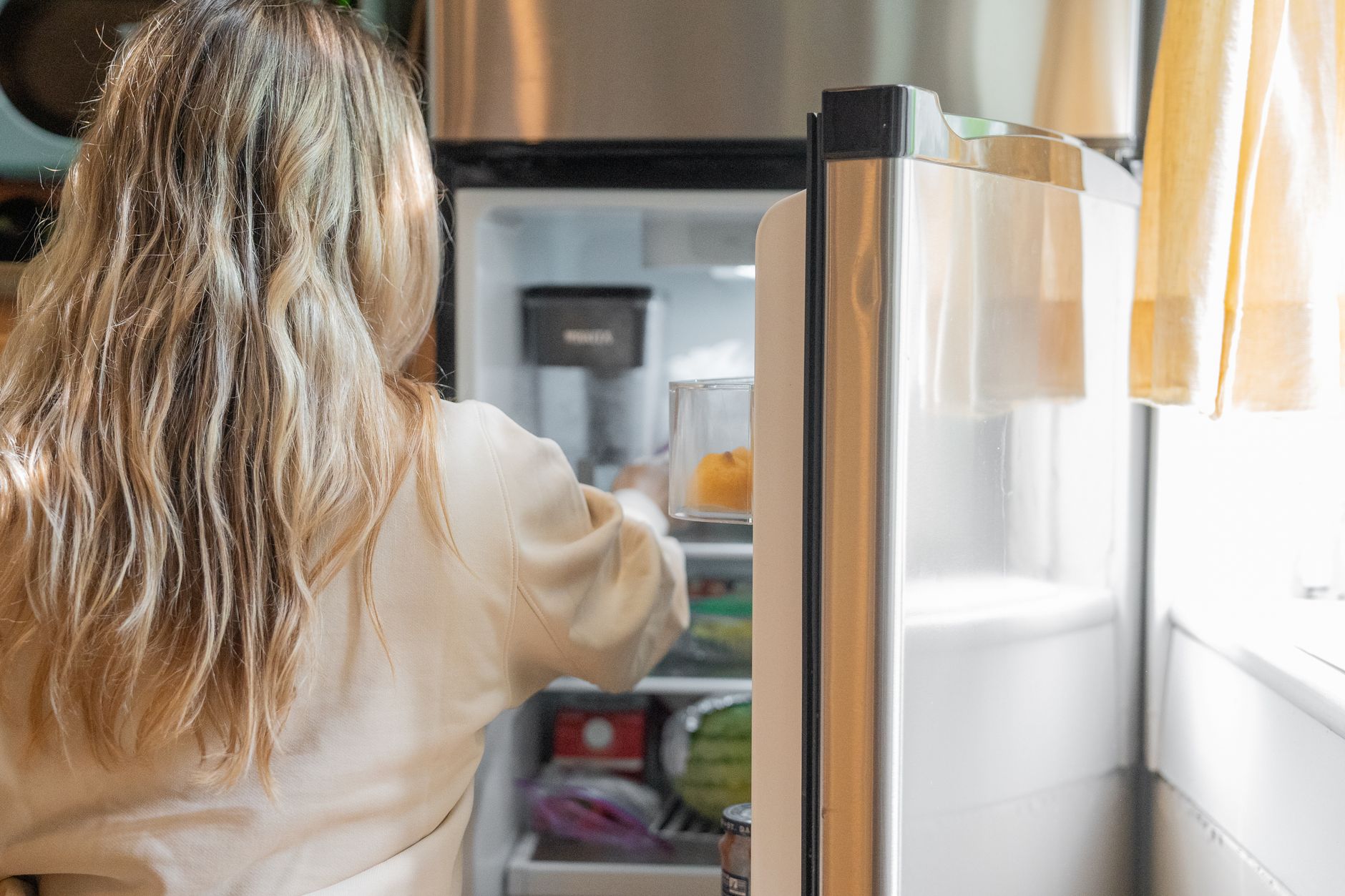
The number itself is easy. The FDA says to keep the refrigerator at 40°F or below and the freezer at 0°F. What’s hard is knowing whether you’re actually at 40, because, in the FDA’s words, “few refrigerator controls show actual temperatures.” The knob that goes from 1 to 7, or from “colder” to “coldest,” is a setting. It doesn’t tell you the temperature.
That gap between what you set and what you get is why the Philadelphia numbers look the way they do. The study, published in Food Protection Trends in 2015, picked homes on purpose rather than relying on surveys, because earlier research found people don’t accurately report what goes on in their own kitchens. Nobody in those 43% of homes chose to keep their milk at 43°F. Their dial was probably on a “normal” setting, and the fridge never showed them otherwise.
The stakes go beyond milk going off a day early. A joint USDA and FDA risk assessment from 2003 estimated that listeriosis cases would fall by more than 70% if every home refrigerator held 40°F or below. Listeria grows at refrigerator temperatures, which is why a few degrees count. The Drexel team’s companion study found higher fridge temperatures tied to higher listeria counts in those same kitchens.
The turkey thaw chart is built on a fridge you haven’t checked
This is the part every Thanksgiving thawing guide skips. USDA’s rule is “approximately 24 hours for each 4 to 5 pounds in a refrigerator set at 40°F or below.” The whole timeline sits on that last clause. The rule has two failure modes, and your fridge could fall into either one.
If your fridge runs warm, say 43°F like nearly half of those Philadelphia kitchens, the bird might thaw on schedule, but it spends days in conditions the chart was never meant for, next to the salad greens and the cream for your pie. If your fridge runs cold, which some people do on purpose to be safe, expect the thaw to drift toward the long end of USDA’s range or past it. You find out at 7 a.m. Thursday, with your hand in the cavity, that the giblet bag is still frozen solid.
Either way, a thermometer turns a guess into a decision. The Mainstays Analog Fridge/Freezer Thermometer is $9.88 at Walmart, and the FDA recommends a cheap freestanding one in both the fridge and the freezer. Put it on a middle shelf tonight and read it tomorrow morning before you open the door. If it says 42°F, turn the control a notch colder and check again 24 hours later. That leaves you time to adjust before the bird arrives.
The real deadline is a 26-hour window that opens Friday night
Here’s the math for a frozen 18-pound turkey you want to start roasting at 10 a.m. on Thursday, November 26.
At USDA’s rate of 24 hours per 4 to 5 pounds, 18 pounds needs between 3.6 days (18 divided by 5) and 4.5 days (18 divided by 4). That’s 86.4 to 108 hours. Counting 108 hours back from 10 a.m. Thursday lands you at 10 p.m. on Saturday, November 21. That’s your latest safe start.
USDA also says a thawed turkey can stay in the fridge for 1 or 2 days before cooking, which gives you an earliest start too. The fast thaw (86.4 hours) plus a two-day hold (48 hours) is 134.4 hours, which puts you at about 7:30 p.m. on Friday, November 20. Put the bird in the fridge between Friday evening and Saturday night and you’re covered whether it thaws fast or slow. If your new thermometer reads 36°F, take the Friday end of that window. If it reads 40°F on the dot, Saturday is fine.
Now look at what missing the window costs. USDA’s cold-water method takes about 30 minutes per pound, with the water changed every 30 minutes, so an 18-pound turkey is 9 hours of thawing and 18 trips to the sink. That’s Wednesday evening gone, or Thanksgiving dinner pushed to 9 p.m. Against that, a $9.88 thermometer and one minute of attention on Friday night is a good trade.
A full fridge is a warmer fridge
The other thing working against you is volume. The FDA’s guidance says to avoid overpacking because “cold air must circulate around refrigerated foods to keep them properly chilled.” The week of Thanksgiving is when everyone ignores that. The turkey takes a full shelf, the extra butter and heavy cream fill the door, and a forty-pound grocery run, warm from the car, goes in all at once.
A fridge that hits 40°F with normal weekday contents can drift above it under that load, and the only way to know is to look. Read your thermometer again Saturday after the big shop and once more Wednesday night when the make-ahead dishes go in. Drinks are the easiest thing to move out. Cider, soda and white wine do fine in a cooler with ice on the back porch, and that frees up the shelf space and airflow the fridge actually needs. Keep the turkey in a pan on the bottom shelf, as USDA advises, so its juices can’t drip onto anything below.
If you’re hosting, it’s the same idea we used for running your oven’s self-clean cycle weeks ahead: find out an appliance has a problem while you still have time to fix it. And if you’re the one handling the raw bird, our piece on why hand sanitizer doesn’t stop norovirus is a good reminder that soap and water is still the right call after you touch it.
So, what temperature should a refrigerator be on Thanksgiving week?
The target is still 40°F or below. The difference this week is that you need to confirm it with a thermometer and keep confirming as the fridge fills up. Buy the thermometer this week, read it Thursday or Friday morning, put the turkey in between Friday at 7:30 p.m. and Saturday at 10 p.m., and move the drinks outside before the fridge gets crowded.

Allie Wright
Allie Wright is an seasoned writer and the main content creator for Ask Her First. She uses her platform to inspire, educate, and uplift people from all walks of life. Allie's writing is a reflection of her deep commitment to celebrating womanhood in all its forms, and she is dedicated to exploring topics that resonate with her readers, from fashion and beauty to health, wellness, and personal growth. Allie's passion for writing is matched only by her love for creativity and expression. In her free time, she can often be found with a paintbrush in hand, lost in the vibrant world of her canvases. She is also an avid reader, always on the hunt for the next captivating novel to broaden her horizons and spark her imagination.
More stories by this author