Table of Contents
On June 21, Chicago got 15 hours and 14 minutes of daylight. On December 21 it gets 9 hours and 8 minutes, with the noon sun sitting at about 25 degrees above the horizon instead of 72. That’s the logic behind the rule every plant tag and garden blog repeats: plants grow less in winter, so water less. For some of your plants, it’s exactly right. But ask how often to water houseplants in winter and the honest answer is that it depends on which window the pot is sitting in, because winter doesn’t dim every room in your house. For a few of them it does the opposite.
Winter dims some windows and brightens others
Colorado State University Extension’s PlantTalk guide to interior light sorts window spots into light levels by foot-candle range (high is 1,000 or more, medium 500 to 1,000, low 50 to 500), and it classifies them by season. A spot within 2 feet of a north-facing window counts as medium light from April through September, then drops to low light from October through March. A spot within 2 feet of a south-facing window does the reverse: CSU lists it as high light from October through March.
That makes sense once you picture the sun. In summer it rides high and mostly skims over a south window. In winter it hangs low and pours straight through the glass, deep into the room. Days are shorter, but a south window in December can deliver more direct light to the plant sitting in it than it did in July. East and west windows stay about the same all year, according to CSU.
So the same rule gets applied to plants in completely different situations. The pothos on a north sill is getting less light and using less water. The snake plant in the south bay window may be using about as much as it did all summer.
Your radiator is drying out the pots that “water less” forgets
Then there’s the furnace. University of Illinois Extension notes that indoor relative humidity can drop below 20% in winter, while most houseplants prefer 40% to 50%. Dry, warm air pulls moisture out of the top of the soil faster. UConn’s Home and Garden Education Center makes the same point in its watering guide: plants can dry out faster in winter, especially when they’re near a heat source, and higher temperatures speed up the drying.
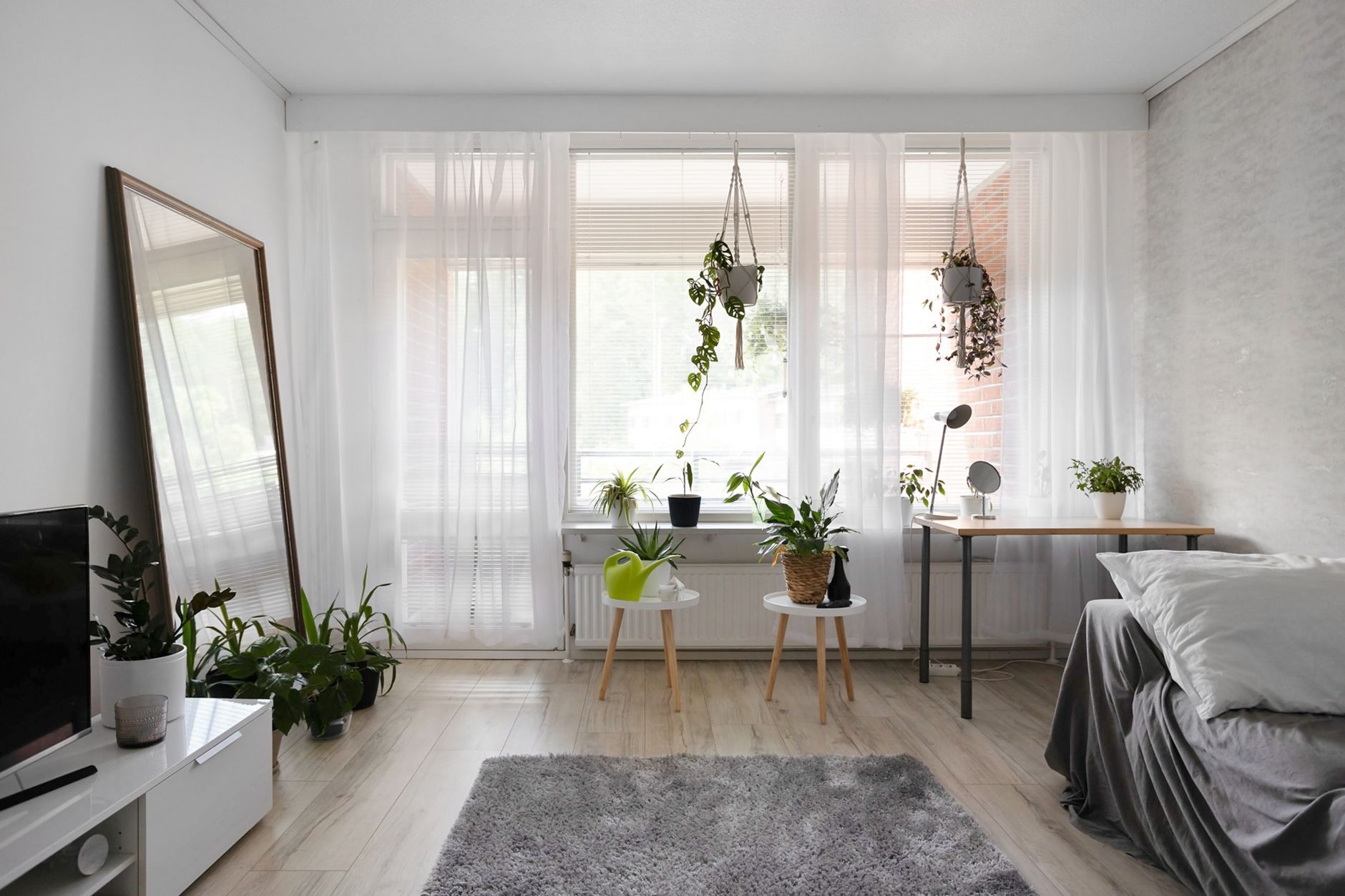
Put those together and you get a house split into two winter climates. There’s the cool, dim corner by a north window, where the soil stays wet for days because the plant barely drinks and nothing is evaporating it. And there’s the warm spot near a vent or a sunny south window, where the pot can go bone-dry about as fast as it did in August. A blanket “water half as often” schedule is wrong for both of them, just in opposite directions.
The calendar math: 19 waterings or 9, and you can’t know which
UConn calls improper watering “the number one cause of houseplant demise,” and a 2023 survey of 1,000 homeowners by Tree Triage, reported by Apartment Therapy, found that 87% had overwatered or underwatered a houseplant. The same survey put average spending at about $172 a year. A calendar schedule is mostly how that happens.
Say you watered a Monstera every 7 days in summer. From today, November 4, to the spring equinox on March 20 is 136 days. Keep the summer schedule and that’s 19 waterings (136 divided by 7 is 19.4). Follow the standard advice to cut back to every two weeks and it’s 9 (136 divided by 14 is 9.7). That’s a 10-watering difference, and nothing about the calendar tells you which number fits your plant.
If that Monstera lives by a north window, the 19-watering version means roughly 10 extra soakings into soil that hadn’t dried out, which is how root rot starts. If it sits in a warm south window, the 9-watering version can leave it thirsty for days at a time. A Costa Farms Monstera deliciosa in a 10-inch grower pot is $41.14 at Home Depot right now. Lose one to a bad guess and that’s almost a quarter (24%) of the year’s $172 plant budget gone. It’s also a plant you probably picked out because you liked it.
How often to water houseplants in winter: weigh the pot, ignore the date
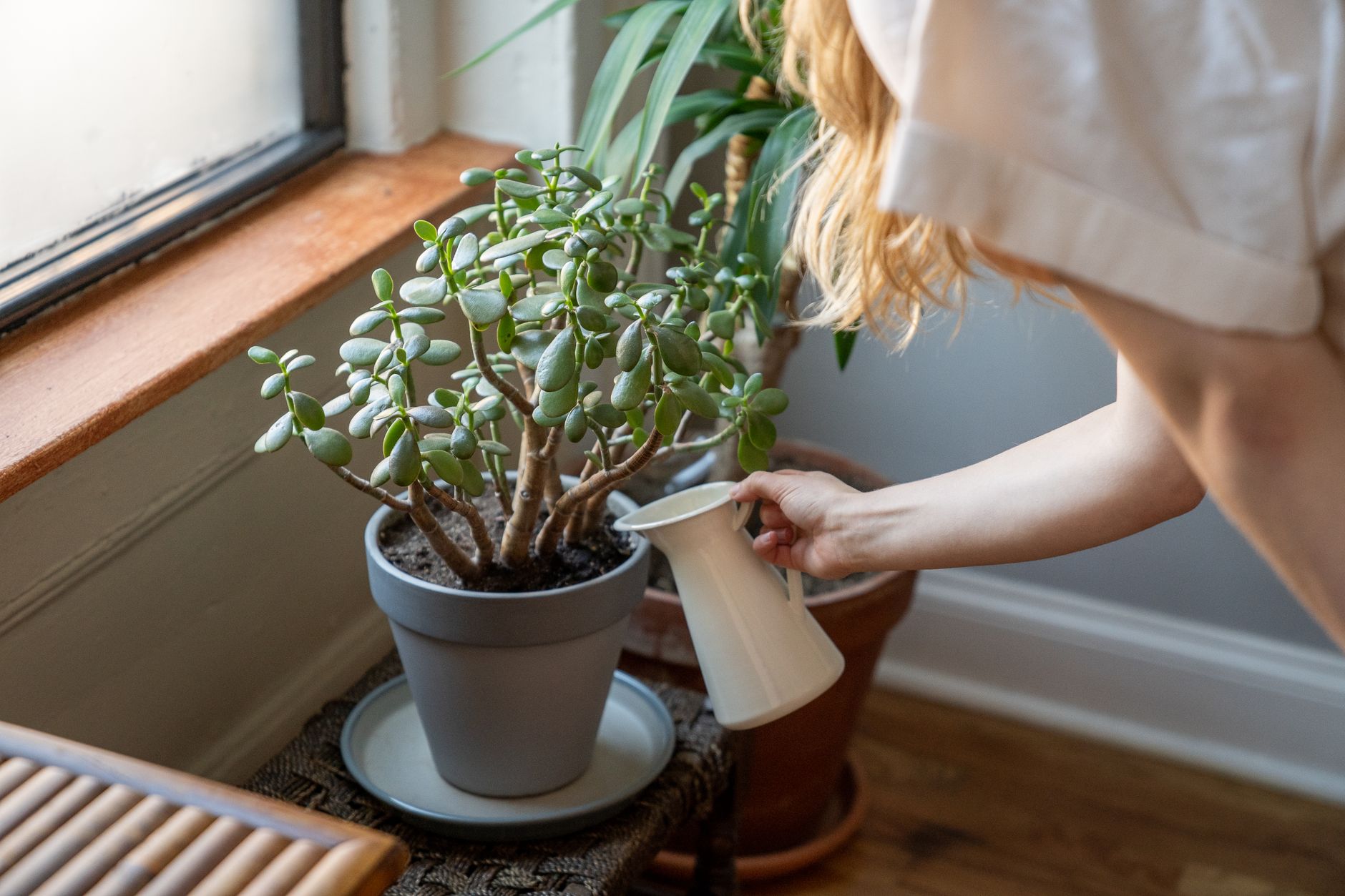
Stop counting days and check the plant. Illinois Extension suggests feeling the top 1 to 2 inches of soil a few times a week and watering only when it’s dry. Then water thoroughly, until the whole pot is saturated. Iowa State’s guidance is similar: water when the soil is dry about an inch down, keep going until it runs out the bottom, and dump what drains out. UConn adds that you should empty the saucer or decorative pot within about an hour so the roots aren’t sitting in water.
The finger test works well on the top inch, but it can’t tell you what’s going on near the bottom of a 10-inch pot. That’s where weight helps. Illinois Extension notes that a dry pot can weigh about half as much as a saturated one, which is a big enough difference to feel. Here’s how I’d use it. Right after a thorough watering, lift the pot, or set it on a kitchen or bathroom scale and write the number on a piece of tape on the pot. The next time the top 2 inches feel dry, weigh it again and write that number down too. The second number is your watering weight. After that, you just lift or weigh, and you’ll know without sticking your finger in the dirt.
Do this separately for each window. You’ll probably find the north-window plants take two or three weeks to hit their number while the south-window ones hit theirs in a week. That’s normal. Each plant is telling you its own schedule, and it’ll keep changing a little as the days get longer after December.
Move plants to match the light, and keep them off the glass
Where a pot sits decides its schedule, so it’s worth choosing the spot on purpose. If a plant that likes bright light is stuck by a north window, winter is a good time to move it to a south or west window, which is what CSU’s seasonal chart supports. Iowa and Illinois both warn against cold window ledges (the glass can get much colder than the room), so keep leaves from touching the panes at night. Most houseplants prefer daytime temperatures of 65 to 75 degrees with about a 10-degree drop at night, per Illinois Extension.
Hold off on fertilizer until spring, too. If your plants are part of how you’ve styled a room, our piece on mindful home decor on any budget has ideas for regrouping them by the bright windows without making the room look like a nursery. Plants that are growing slowly don’t need it, and the extra salts build up in soil that isn’t being flushed as often. If your dim corners are bothering you as much as your plants, our guide to testing a SAD lamp’s brightness explains why light drops off so quickly with distance, which is the same reason the plant two feet from the window is doing better than the one six feet back.
So how often to water houseplants in winter? As often as each pot tells you to. The north-window plants will want a lot less water than they did in July. The south-window and radiator-side plants may want almost the same. Weigh one of each this week and you’ll know which plants the “water less” rule was written for.

Allie Wright
Allie Wright is an seasoned writer and the main content creator for Ask Her First. She uses her platform to inspire, educate, and uplift people from all walks of life. Allie's writing is a reflection of her deep commitment to celebrating womanhood in all its forms, and she is dedicated to exploring topics that resonate with her readers, from fashion and beauty to health, wellness, and personal growth. Allie's passion for writing is matched only by her love for creativity and expression. In her free time, she can often be found with a paintbrush in hand, lost in the vibrant world of her canvases. She is also an avid reader, always on the hunt for the next captivating novel to broaden her horizons and spark her imagination.
More stories by this author