Table of Contents
State Farm paid more than $628 million on over 20,000 frozen-pipe claims between 2024 and mid-2025, and the average check topped $30,000. The surprise is in the list of states that cost it the most. Illinois came first, which you’d expect. Then Oregon, Washington, Texas and Tennessee. So if you’re Googling how to keep pipes from freezing and assuming it’s a Minnesota problem, the claims data disagrees with you.
The standard advice (drip a faucet, open the cabinets, keep the heat on) is right as far as it goes. What it leaves out is why the drip works. Once you know that, you’ll see that plenty of people faithfully drip a faucet every cold night that isn’t protecting the pipe that’s actually at risk.
Pipes burst downstream of the ice, so the drip is pressure relief
Most of us picture a pipe bursting because the ice inside it swells and cracks it right there. Researchers at the University of Illinois tested that idea in the 1990s and found it’s mostly wrong. Jeffrey Gordon’s 1996 Building Research Council report, funded by the insurance industry’s property loss group, describes two stages backed by two years of lab and field work. First, a stretch of pipe in a cold spot freezes solid and forms a plug. Then, as more ice forms, it squeezes the water trapped between that plug and the closed faucet at the end of the line. Pressure builds in that trapped water, and the pipe gives way where it’s weakest. That’s often somewhere warmer than the frozen spot.
That’s why a slightly open tap helps. It isn’t mainly that moving water won’t freeze, which is how it usually gets explained. An open faucet gives that trapped water somewhere to go, so the pressure never builds. The report’s main recommendation is to keep pipes inside heated space in the first place. Since the cause is pressure, though, anything that relieves pressure helps too.
The faucet you drip has to sit at the end of the cold pipe
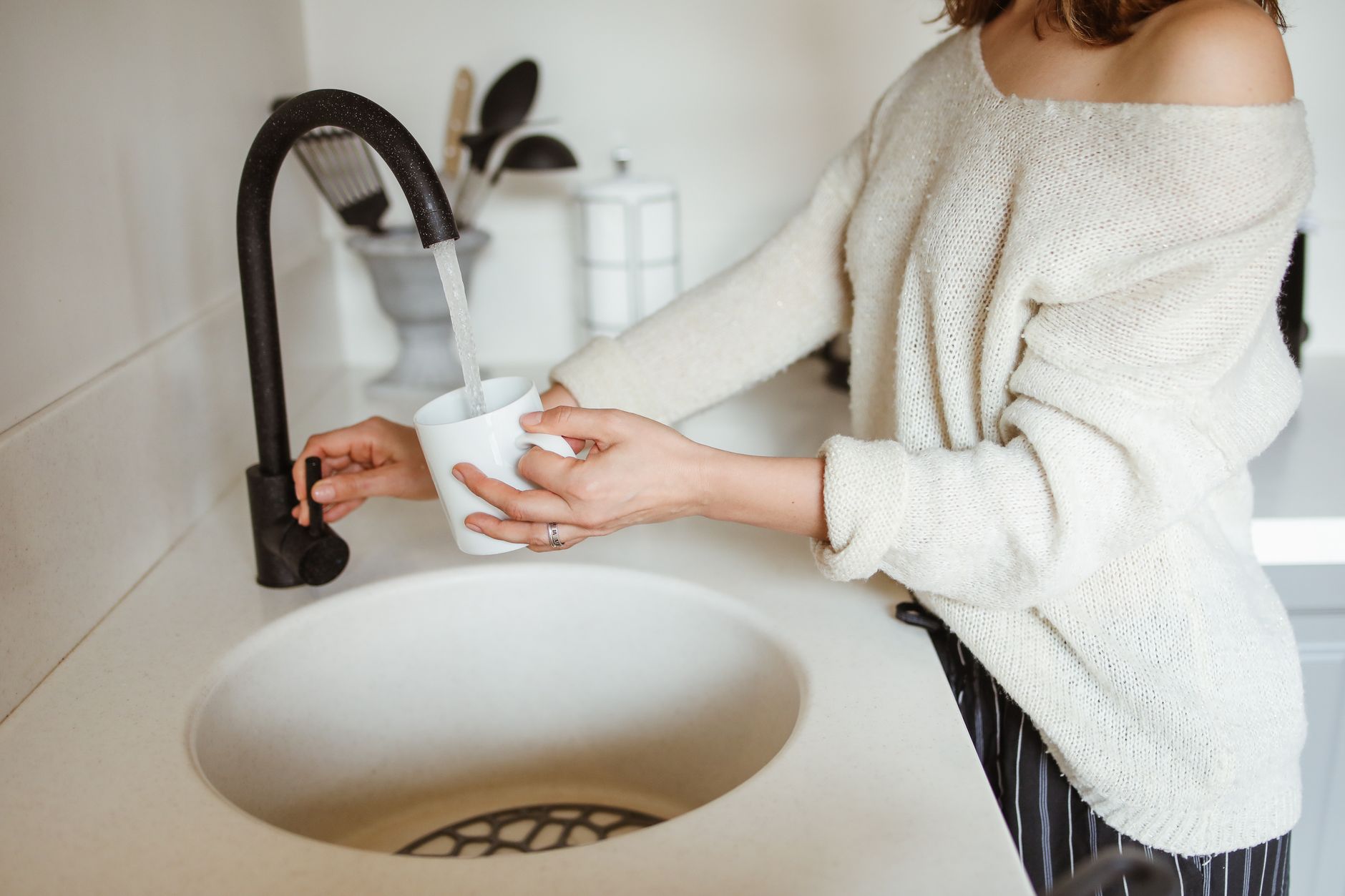
This is the part most guides skip. Mississippi State University Extension’s guide to dripping a faucet says to drip the cold tap farthest from your water meter, because that pulls water through the main line across the house. That’s good advice for the main line. But your pipes branch. If the run that worries you is the one feeding the kitchen sink along an outside wall, or a bathroom over the garage, the water in that branch only moves when that particular faucet is open. A drip in the upstairs bathroom does nothing for the kitchen branch, and if a plug forms under the kitchen window, the trapped water has nowhere to go.
So pick the faucet by the pipe, not by distance. Find the plumbing that runs along exterior walls, through crawl spaces, garages or attics, and drip the faucet at the end of each of those runs. In a lot of houses that’s two taps. Open the cabinet doors under those sinks too, which is the one tip State Farm and the extension service both give. If the hot line runs along the same cold wall, crack the hot side as well, since a plug can form in either pipe.
How to keep pipes from freezing in a mild winter (yes, that’s when it happens)
NOAA’s winter outlook, released in October, expects a strong El Niño and favors above-normal temperatures across the northern tier and the whole eastern half of the country, the South included. That sounds like permission to skip all this. It’s actually why Texas and Tennessee rank so high.
Houses in places that freeze every year are built for it. Supply lines run through heated space, and people know where their shutoff valve is. In milder climates, pipes routinely run through unheated attics, slab-edge walls and garages because builders don’t expect a hard freeze. A warm winter doesn’t mean no cold nights. It means the few hard ones show up when nobody is ready, in homes where the pipes are exposed. Oregon and Washington, both in State Farm’s top five, fit the same pattern: mild most of the year, with the occasional cold snap.
Five cold nights of dripping two faucets costs about $1.82
Mississippi State’s extension estimates a proper drip at about a gallon an hour, roughly enough to fill a pitcher. LawnStarter’s 2026 water bill roundup puts a typical family-of-four bill at about $78 a month for around 12,000 gallons. That works out to about $6.50 per 1,000 gallons, or two-thirds of a cent per gallon.
Say a cold snap gives you five nights below freezing, and you drip two faucets (kitchen and the bathroom over the garage) for 14 hours a night. Each faucet uses 14 gallons a night, so two faucets for five nights comes to 140 gallons. At $6.50 per 1,000 gallons, that’s 91 cents. Many utilities also bill sewer by the gallon, so double it and you’re at $1.82 for the whole cold snap.
Compare that to State Farm’s average claim of more than $30,000. Even if your insurer covers it, you’ll pay your deductible and live through weeks of fans and drywall repair. The water cost isn’t worth a second thought. What matters is picking the right faucets.
When you’re away for Thanksgiving, the thermostat matters more than the drip
The riskiest night for your pipes may be one when you’re not home. Plenty of us knock the thermostat way down before driving to Mom’s for four days. State Farm’s guidance is to keep the house at no less than 55°F. Go below that and the pipes inside your exterior walls lose the bit of warmth that was protecting them, with nobody around to notice.
For any trip longer than a weekend, there are two more steps. Before you leave, find your main water shutoff and turn it off, then open a faucet on the lowest floor to drain the lines. With no water in the pipes, nothing is left to freeze and push. Then ask a neighbor to look in if a cold front comes through, because a furnace that quits on day two of five is the worst case. If you’d rather leave the water on, at least drip the at-risk faucets while you’re gone. Your pipes won’t care that you’re out of town.
If you’re getting the house ready for hosting, our self-clean oven timing guide covers the other appliance that tends to fail the week of Thanksgiving. And if you’re the one traveling, here’s why you’ll sleep badly on the first night at your parents’ place.
The short version on how to keep pipes from freezing: figure out which pipes run cold, drip the faucets at the end of those runs, keep the house at 55°F or warmer, and shut off the main before you leave town. It takes about five minutes and maybe two dollars.

Allie Wright
Allie Wright is an seasoned writer and the main content creator for Ask Her First. She uses her platform to inspire, educate, and uplift people from all walks of life. Allie's writing is a reflection of her deep commitment to celebrating womanhood in all its forms, and she is dedicated to exploring topics that resonate with her readers, from fashion and beauty to health, wellness, and personal growth. Allie's passion for writing is matched only by her love for creativity and expression. In her free time, she can often be found with a paintbrush in hand, lost in the vibrant world of her canvases. She is also an avid reader, always on the hunt for the next captivating novel to broaden her horizons and spark her imagination.
More stories by this author