Table of Contents
I own five pairs of gloves, and every one of them has failed me on the walk from the parking lot. If you’ve asked yourself “why are my hands always cold” while wearing perfectly good gloves, the answer probably isn’t the gloves. Your fingers are where your body saves money when the rest of you feels chilly, and the place to fix that is a foot or two north of your wrists.
Why are my hands always cold? Your body is guarding your core
When your body senses cold, it narrows the small blood vessels in your hands and feet to keep warm blood around your heart and other organs. That’s normal physiology, and women seem to lean on it harder. A University of Utah study published in The Lancet in 1998, the one with the memorable title “Cold hands, warm heart,” found women’s hands ran about 2.8 degrees Fahrenheit colder than men’s on average.
For some of us the response goes past normal. Raynaud’s phenomenon is the version where the blood vessels clamp down so hard that fingers turn white or blue, go numb, and then tingle or burn as they warm. The National Institute of Arthritis and Musculoskeletal and Skin Diseases says it’s more common in women, in people with a family history, and in people living in cold climates, and that attacks can last anywhere from a few minutes to a few hours. Primary Raynaud’s, the more common kind, has no known cause and is usually mild. Secondary Raynaud’s is tied to another condition, like lupus or scleroderma, and tends to be more severe.
How common is it? A 2017 review by Johns Hopkins rheumatologists Samantha Shapiro and Fredrick Wigley in the Cleveland Clinic Journal of Medicine cites a pooled prevalence of 4.85% for primary Raynaud’s in the general population, based on a 2015 meta-analysis. That’s roughly one person in 20. If your fingers change color in the cold, mention it to your doctor so they can rule out the secondary kind, especially if it’s new.
Warming your upper body is what warms your fingers
Most cold-hands advice skips this part. In 2000, University of Minnesota researchers working on protective clothing for extreme environments published a study in the European Journal of Applied Physiology that cooled volunteers in a liquid-cooled garment, then warmed one part of the body at a time. Warming the upper torso, arms, and head together produced a significant rise in finger temperature, more than warming the head alone, the torso and arms alone, or the legs and feet. Volunteers also reported their hands felt warmer and they felt more comfortable overall.
It was a small study, just six people, so I wouldn’t build a religion on it. But it lines up with what the doctors say. The Shapiro and Wigley review tells patients to “keep the whole body warm” and calls whole-body warmth and staying calm among the most important ways to cut down on attacks. NIAMS is even more specific in its self-care steps: keep your core (chest, abdomen, and head) warm as well as your hands and feet, wear layers and a hat, and bring a sweater into air-conditioned places.
Here’s how I think about it now. Your body only opens the taps to your fingers when it thinks the core is safe. Gloves trap whatever heat reaches your hands, but if your torso is cold, very little arrives. A hat and a warm middle layer change the signal at the source.
A winter of hand warmers costs $89.70 and heats the wrong spot
I love a disposable hand warmer, so I ran the numbers on what my habit costs. A 40-pair value pack of HotHands, rated for up to 10 hours of heat, was listed at $29.90 at Walmart this week. That’s about 75 cents a day.
Now count the days. From today, November 10, through March 19, the last weekday of winter, there are 94 weekdays. If you use one pair every commute, a 40-pair box runs out in eight weeks, so you need three boxes: $89.70 for the season, with 26 pairs left over for next year. Over two winters that’s about $179.40 of hand warmers, and every one of them heats the spot your body has already decided to shortchange.
Compare that with warming your middle instead. ORORO’s women’s heated fleece vest is $159.99, and its four heating zones are the collar, the mid-back, and the two hand pockets, which is close to the torso-and-neck combination the study found worked best. The battery lasts 8 hours on low, enough for a workday. At $89.70 a winter in disposable warmers, the vest pays for itself in less than two winters ($159.99 divided by $89.70 is 1.78), and you still get warm pockets for your hands.
You don’t have to spend anything to test the idea, though. For one week, add a hat and a fleece or wool layer under your coat, and keep your current gloves. If your fingers stay pinker by the time you reach the office door, your hands were never the problem.
Free fixes come first, and the money goes to your middle
Start with the free stuff. Wear a hat, layer your torso, and bring a cardigan to work, because NIAMS specifically flags walking into air-conditioned or chilly buildings as a trigger. Stress is a trigger too, which is useful to know during the holidays. NIAMS suggests deep breathing or other relaxation techniques, and if you’re a smoker or vaper, nicotine narrows blood vessels, so that’s worth a conversation with your doctor.
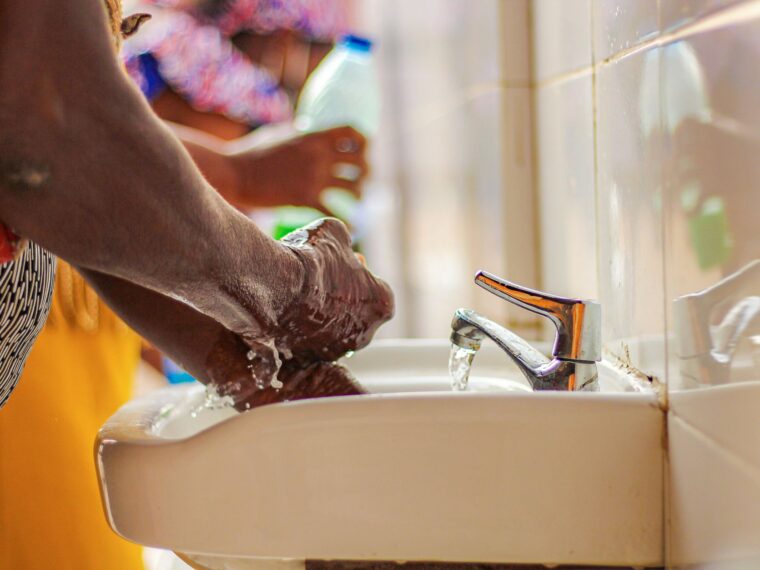
Next, keep moving through the day. Sitting still at a cold desk is when my fingers go numbest, which is one more reason I like the 10-minute walk after meals. When an attack does hit, NIAMS says to act fast: run your hands under warm (not hot) water, tuck them in your armpits, or whirl your arms in a windmill. You’ll look ridiculous in the parking lot. It works anyway.
Only after that would I spend money, and I’d spend it where it reaches your core. A heated vest or a warmer layer comes before a sixth pair of gloves. Keep a few disposable hand warmers for the truly brutal mornings, and put one in a pocket near your body rather than stuffing it into a glove. While you’re bundling up, protect your boots too, since salt stains on leather are the other winter tax nobody budgets for.
Fingers that change color deserve a doctor’s visit
Cold hands on a 20-degree morning are normal. Fingers that turn white or blue, stay numb, or start acting up when they never used to are worth a call. Secondary Raynaud’s is linked to conditions like lupus and scleroderma, and only your doctor can sort out which kind you have. Some prescription medicines can also make blood vessels narrow, so bring a list of what you take. If your doctor gives you the all clear, the plan stays the same: when you wonder why your hands are always cold, warm your torso and head first, and let the gloves do the easy part.

Allie Wright
Allie Wright is an seasoned writer and the main content creator for Ask Her First. She uses her platform to inspire, educate, and uplift people from all walks of life. Allie's writing is a reflection of her deep commitment to celebrating womanhood in all its forms, and she is dedicated to exploring topics that resonate with her readers, from fashion and beauty to health, wellness, and personal growth. Allie's passion for writing is matched only by her love for creativity and expression. In her free time, she can often be found with a paintbrush in hand, lost in the vibrant world of her canvases. She is also an avid reader, always on the hunt for the next captivating novel to broaden her horizons and spark her imagination.
More stories by this author